← Bits
Dec 29, 2025
Helping Build Healthy Software Organizations: Flow, Metrics, and Developer Experience at Datawise.ai
By Manos Tzagkarakis, Lead Engineer at Datawise.ai
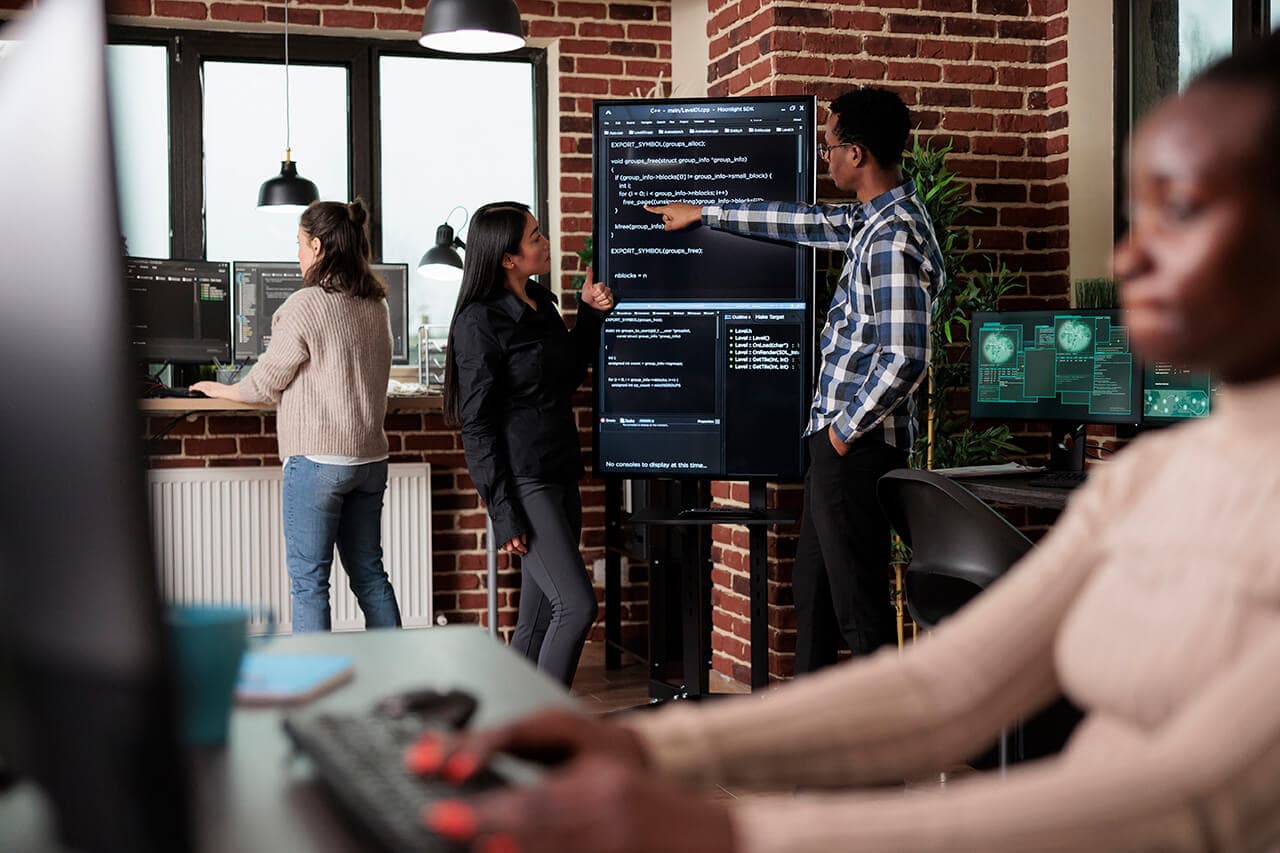
Over the past decade, the software industry has learned a hard truth: you can have excellent engineers, modern cloud infrastructure, and the latest frameworks, and still struggle to deliver meaningful change quickly. What separates consistently high‑performing organizations from the rest is not a specific technology choice, but how teams, architecture, and workflows are designed to support a consistent and predictable rate of change.
In practice, this comes down to three things working together:
This article explores how these elements fit together, and how we at Datawise.ai use them to create environments where teams and the products they build can thrive.
Flow First: Why Structure Matters More Than Tools
Most software organizations grow in a very similar pattern: a few engineers build a prototype, it succeeds, more people join, departments form, and gradually the system becomes harder to understand. Delivery slows down.
"We need microservices."
"We need Kubernetes."
"We need a new CI/CD platform."
Those are the kinds of solutions people quickly propose, and although all of them can be useful, they are rarely the root cause. The real constraint is usually how information flows through the organization:
When responsibilities are scattered across functional silos (different backend teams, frontend teams, QA teams, Ops teams), every change becomes a mini‑project in coordination. In contrast, when small, cross‑functional teams own a well‑defined stream of work end‑to‑end, they can move faster, learn quicker, and take real ownership of outcomes.
Frameworks such as Team Topologies have popularized this idea: align teams around streams of value, reduce unnecessary dependencies between them, and support them with specialized teams where it makes sense. The key is not the label, but the intentional design of team boundaries and interactions. This, in turn, is tightly connected to the technical aspects of how software is architected, built and operated.
Measuring What Matters: DORA as the Fitness Test for Flow
Designing for flow is one side of the coin. The other side is measuring whether the system is actually healthy. This is where the DORA metrics play an important role:
These metrics give an honest view of the system's ability to deliver change. They are not just DevOps vanity numbers; they reflect how well structure, architecture, and people are working together.
A team structure that looks great on paper but results in deployments every three weeks and long lead times is not doing its job. A beautiful architecture with tangled ownership and slow reviews will still show up in DORA as low deployment frequency and high lead time.
At Datawise, we treat DORA as the fitness test for flow:
The numbers don't tell the whole story, but they quickly reveal whether a change is helping or introducing new friction. Continuous feedback has always been one of the most important aspects of the Agile way of thinking and working, even if the term hasn't been in the spotlight lately.
Beyond Output: SPACE and the Human Side of Engineering
DORA focuses on the system's ability to ship changes. The SPACE framework complements this by looking at the human side of engineering performance:
SPACE reminds us that productivity is not just about how many pull requests are merged. It's about how it feels to work in the system every day:
A frictionless developer experience is not something that should be considered optional. It is a force multiplier. Teams that enjoy working in the system, that trust their pipelines, that enjoy working with their coworkers and stakeholders, and that can see the impact of their work tend to:
SPACE gives us language and structure to talk about this explicitly. It connects the subjective experience of engineers with tangible outcomes in the product and the organization.
Put differently: flow, metrics, and developer experience are three views of the same system. You can't optimize one in isolation for long.
Architecture as a Maturity Journey, Not a Destination
Architecture is where many organizations start the conversation, but in reality it is part of a maturity journey, not a fixed target. That journey is not only about how many deployables you have, but also about how deeply you understand your domain and how well your design reflects that understanding.
For many products, the path looks something like this:
Along this journey, design techniques become just as important as the runtime architecture:
Practices from Domain‑Driven Design (DDD) help you discover and name subdomains, bounded contexts, and the relationships between them. That gives you a language for deciding where to draw boundaries before you decide how to implement them.
Event storming and similar collaborative workshops bring business and engineering together to map flows, events, commands, and policies end‑to‑end. They uncover hidden complexity, surface integration points between teams, and highlight where asynchronous, event‑driven communication makes sense.
The mistake is to jump straight to microservices or event‑driven architectures without first building this shared understanding of the domain and without the organizational maturity to support them. Distributed designs introduce network calls, eventual consistency, and more failure modes. They pay off when you already have:
In other words, architecture should follow organizational maturity, DORA and SPACE outcomes, and the lived experience of teams, not lead them. Techniques like DDD, event storming, and event‑driven design are part of that maturity: they help you identify problems before it is too late and make better decisions about where to invest in complexity and where to keep things simple.
Frictionless Developer Experience: Where Everything Meets
If team boundaries, architecture, and metrics are the conceptual pillars, the developer experience (DX) is where it all becomes tangible.
A healthy developer experience feels like this:
DX is where DORA and SPACE intersect:
This is also where ideas often associated with platforms and internal developer portals come in: reusable templates, shared libraries, self‑service infrastructure, and well‑designed paved paths and information sharing mechanisms that make the right thing the easy thing.
How We Apply This at Datawise.ai
At Datawise.ai, we design our work environments and client engagements around these principles.
As a relatively small engineering firm, we are large enough to bring serious expertise in backend systems, various architectures, data platforms, mobile, and modern DevOps practices, but small enough to stay personal. We typically engage with clients in a way that combines architecture and org-design guidance with hands-on delivery: we don't just advise, we build alongside their teams and help them internalize these practices.
In practice, that means:
Because we combine theory with day‑to‑day delivery, our clients don't just get code. They get a healthier way of working: clearer boundaries, faster feedback, and systems that are easier to evolve. And our own engineers get to work in environments where the principles they read about, like fast flow, healthy metrics, frictionless DX, are actively pursued, not just theorized.
Bringing It All Together
In the end, healthy software organizations are not defined by whether they run on microservices, Kubernetes, or any other specific technology. They are defined by how well they enable small, focused teams to own outcomes, evolve their architecture safely over time, and work in an environment where doing the right thing is the path of least resistance.
DORA and SPACE give us a way to see whether this is actually happening. They connect structure, architecture, and human experience into a single, coherent picture. Flow, reliability, and developer happiness stop being abstract aspirations and become measurable, improvable qualities of the system.
At Datawise.ai, this is the lens we use every day, both internally and in our client work. We combine domain‑centric design, pragmatic architecture, and frictionless developer experience to create systems that can keep changing at a steady pace and keep producing predictable outcomes for our clients.
If you are trying to modernize an existing platform, build a new product, or simply give your teams a healthier environment to work in, this way of thinking is not a luxury. It is a real competitive advantage.